News and Politics: June 2008 Archives

Still feeling some anxiety about the fact that my OPT card still hasn't arrived. If it's not here or there by tomorrow, it's going to get annoying. Also having to wait on parts for my car, which means waiting on how much it's all going to cost. Planning to go to the Jeff Koons exhibit at the MCA today. We'll see if it happens.

Cable modem got swapped out yesterday, hopefully that fixes things. I suppose there's a chance it could be the router, but then the phone would still work.

Was hoping to get interested in Wimbledon, but just found out Sharapova's been ousted. Ivanovic looks interesting though. Politics has been more boring than usual, if that's possible.

Cookie monster on Colbert was hilarious.

Can't seem to get past watching Family Guy, just downloaded Back to the Future in case I decide to watch it. Am halfway through Rosemary's Baby. Must find/queue up more features to watch. Tempted to watch Star Wars and Star Trek. But the discs are buried somewhere and I'm not in a digging mood. Feel silly downloading them again.

Am finding ways to make peace with utorrent's auto upload limit feature. Can't be bothered with links or pictures with this post, but may change my mind later. The anonymous online lit mag sounds interesting.

The Economist has a lovely letters page. They publish literate and intelligent responses to their articles, and conscientiously present the kind of dissent their ideas provoke. Because disagreement is good - there is nothing not virtuous about listening to the considered thoughts, ideas and judgements of other reasonable intelligent people.

At the same time, a little education is a dangerous thing. Because we are very smart in one area of our lives (some of us are not even that) we assume we are just generally Smart. This is not necessarily untrue. A lot of people are exactly Smart. But most people don't have that much depth of knowledge in "most" things. The Economist's Lexington not too long ago talked about it in this way:

The world is a complex place. Most people are inevitably ignorant about most things, which is why shows like "Are You Smarter than a 5th Grader?" are funny. Politics is no exception.

Insert rimshot here. Ba-dum-pum. The problem then is that people can often think they know more than they do. This is more a product of success than failure in many ways. People are taught that they should be critical of ideas presented to them, to interrogate them for a kind of intellectual consistency, amongst other things. Being critical of ideas is a good thing. But at some point, because we don't have depth of knowledge about all things, we have to rely not on simply trusting the correctness of specific ideas as we assimilate them, but learning to trust the correctness of specific people on specific issues on which those people are knowledgable. We begin to trust people the way we trust ideas.

Now I'm not saying we should be idiots and believe everything we see and hear on Fox News (or, at certain times, MSNBC, or CNN - yes, that means you Lou Dobbs). That is exactly what I'm not saying. But we learn to evaluate if some people talk with a depth of authority on a given issue. For instance I might not take as gospel everything that Pat Buchanan says, but as an observer of politics and the political process, he is undoubtedly a genius.

And yet we have this lovely thing called the miracle of aggregation, or "the miracle of crowds" - if people act randomly when they don't know something, the fact that some people do know what they know will mean that en masse, large crowds will vote correctly. But people do not vote in elections randomly (at which point I'm just ripping off the article I've been referring to):

First, people do not understand how the pursuit of private profits often yields public benefits: they have an anti-market bias. Second, they underestimate the benefits of interactions with foreigners: they have an anti-foreign bias. Third, they equate prosperity with employment rather than production: Mr Caplan calls this the "make-work bias". Finally, they tend to think economic conditions are worse than they are, a bias towards pessimism.

And in this way, people with their personal biases actually tend to vote for ideas and policies that systematically make them worse off. It's not difficult to understand why. The ideas above are all counter-intuitive. You wouldn't normally assume one thing would lead to another. It requires education and a deference to facts and data to persuade you that these ideas are true. But for more on that, you can refer to the article in full.

The point I'm making here is a clear and unequivocal one against the idea of the wisdom of "populism." Which brings me back to the Ecnomist's letters page, where recently an individual has made a full throated support for the tenets of populism, really accusing the Economist of libelling the populist creed:

Exactly when did "populist" enter your style guide as the preferred all-purpose pejorative (Lexington, February 9th)? Given that neither John Edwards nor Mike Huckabee have come anywhere near winning their parties' nomination, it is far from clear that they are even "popular", let alone "populist".
Even assuming that they are popular, what is the objective characteristic (with the emphasis on objective) that would transmute them from being good, wholesome popular candidates into nasty, wicked populist ones? In the absence of an objective definition, "populist" seems to be nothing more than a hollow term of abuse that The Economist hurls at anyone whose opinions are at odds with its own. May I suggest that in future you simply describe such people as "evil". It is easier to pronounce than populist and uses less ink.

Which is not an unfair criticism, since the Economist is rather fond of the term. Which does not mean that the Economist is unfair in it's usage, it simply uses the term as a shorthand, as all intelligent people do at some point to communicate a complex idea in a pithy manner. You'll also note that the Economist refers to populist instincts (to a greater or lesser extent) on both sides of the American political spectrum. Another letter writer uses an oft used Economist tactic to help ground the issue, a historical perspective:

Populism in America reached its height in the late 19th century and was embodied in the Populist Party, which proposed policies such as nationalising the railroads and enforcing limitations on private property. Since the party's decline the term "populist" generally refers to candidates who market themselves as the representative of "the common man". Such candidates are usually isolationist, desire heavier government regulation of the economy and subsidies for the poor.
Examples range from William Jennings Bryan, a Populist presidential aspirant, to Huey Long, and presently to John Edwards and Mike Huckabee. Populist candidates are antagonistic to free trade on some level and usually do not have a grasp of basic economics. It neither surprises nor perturbs me that The Economist does not like populist politicians.

So we can talk about two distinct strands in the discussion of the word populist. One is the instinct to market yourself as a populist - saying that you are for what the common man is for. The other is where you actually believe, and want to enact those ideas, regardless of whether they have any intellectual, academic or practical basis. Both are harmful.

I have no problem with politicians being Machiavellian enough to say what they need to say in order to get themselves elected. In fact I (perversely) trust it, since for me, it indicates that they are to some extent clearly working towards their own self-interest. I certainly took great joy in Hillary Clinton's vaulting ambition towards power, and remain a staunch supporter of hers. But she knows better than the rhetoric she spouts, and I have proof, evidence, a sustained record of actions, that convinces me she would not be so foolish as to enact some of the policies she might support publicly.

Those policies would be wrong, and they would work contrary to the greater good of the people on whose behalf she would eventually work. And so Hillary says it, but won't do it. Because I believed she wouldn't do it, I could understand why she would say it. But when other people say what she says, because it's not true, and not good policy, I'm less sure. And in the end, it becomes a strange kind of crying wolf - or in this case, crying the need for protectionism: where even though the wolf never shows up, people still believe it's there. 

As long as politicians continue to give credence to ideas that they know are not true, they poison the public discourse. So much so that some people end up saying such things as if they are true. To say that shipping jobs overseas is bad, even though it helps the competitive advantage of the companies that do so, preserving more jobs than those that are lost (I'm already simplifying), only makes it harder for companies to exactly preserve those jobs that can actually be preserved. The jobs that are being "sent" overseas can more accurately be described as jobs that economic conditions demand eventually be sent to places where labour is cheaper. Erecting barriers to make that more difficult just delays the pain and stores it up, so that more jobs are lost more abruptly later for having the delay.

But again, this is already a much bowlderised presentation of a complex problem - I cannot begin to express my own ignorance of how this works. But I talk about it this way because I've been told by people who know, that this is sort of how it works. I trust that people who know more than I know are accurately representing their ideas. Who would have imagined that the acme of intellectual thought would be, to some extent, trust and belief?

I'm not saying that people must speak the truth at all times and in all ways, but it does make me admire the people who do speak the truth, and who do trumpet ideas that are in line with that truth. But it's paradoxical that even though John McCain exactly does this and lionises free trade, his policy proposals have been at best anaemic so far.

Hillary's rhetoric, while unhappy and perhaps a little disappointing on the level of that honesty, did mask what I think is a firm grasp of intelligent economic policy. With the new guy, unfortunately, all we're hearing is dishonesty, dissembling and empty rhetoric - without any of the assurance that it's backed up by the will to stand up for what is right over what is popular. Or worse, it might even be he actually believes the bullshit he's spouting.

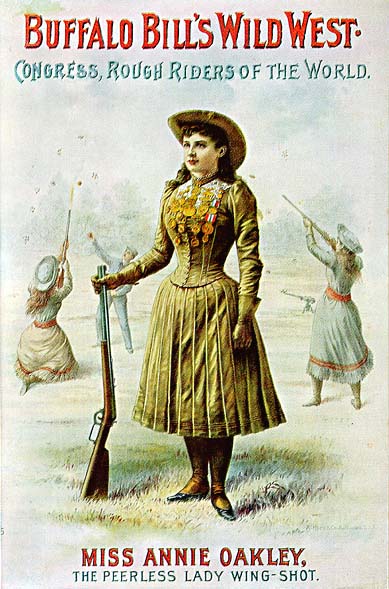
Republicans get a bad rap. They have allowed themselves to be thought of as the party of hate and fear. They hate brown immigrants because they are racist, just as they were racist against blacks. They hate gay people with their evil sneaky sodomy. They also win elections only by preying on the fears of naive (stupid, redneck, etc.) voters, constantly talking about how the evil terrorists (much like the black and brown gay immigrants) are out to get you.

But when it comes to hate and fear, the Democrats rolled up their sleeves and said: "Anything you can do, I can do better. I can do anything better than you." And they do it better because they are presumed to be the "halo" party, the party of inclusion, the party of economic justice and hugging everyone. How better to use that image than to prey on people's hate and fear? It's almost breathtaking how the Democrats, and in particular the putative leader of their party, has so conveniently found ways to legitimise jingoistic rhetoric into their populist vernacular.

Whenever they talk about all their money being sent to China, that's what they're doing. Anytime they talk about wanting to be free from "foreign oil," that's what they're doing. "I will not allow a single dollar of taxpayer money ot subsidise sending American jobs overseas." They're saying these are the same foreigners who take Americans hostage, come into our border to blow things up, steal our jobs, and even when they are being strange far away, they're still rubbing their hands together to steal our jobs and manipulate their currency.

Free Trade stops wars. Free trade stops wars because economies become too intricately bound to one another so that to even think of engaging in some kind of military aggression would be like pulling on ends of a rope. What is more, free trade is incumbent on free interactions of people, rather than the ghetto-ization of people by geographic origin.

So what if you "owe money to China?" As with all relationships between borrowers and lenders, the tension cuts both ways. Yes you have obligations to the people who are lending you money, but the people who are lending you money are also vulnerable since all their money is with you. They're as afraid you will renege on your debts as you are afraid you won't be able to pay them back. As long as that relationship exists, it's just yet another powerful deterrent to either side going too far off the reservation.

Businesses know how useful foreign things (including people) are. You get things better and cheaper now than if you didn't have foreign things. I trust a pro-business party to be inclusive in a way a patriarchal party finds much more difficult. Pro-business individuals are more likely to put aside predjudice in order to get what they want/need for their business - it is in their self interest. 

In contrast, people who want to paint themselves as being "inclusive" have this rather woolly soft-headed notion that we should be nice to everyone because "it's the right thing to do," that things should be "fair" and there should be an "even playing field." I trust people who have their own self-interest in mind, not people who have this flexible notion of right and wrong; who can "include" people to feel good about themselves, but damn all things foreign with the same breath.

You can feel good about yourselves all you want for rubber stamping a symbol of progress, but that does not annoint you as holy. It's a peculiar kind of self-deception to lionise the symbol of something that has none of it at its base. You might as well have the Maltese Falcon as the nominee of your party.

God damn those Belgians, with their capital, global distribution network and greater economies of scale. Such are the tools of the heathen bastards that are so rudely and deviously attempting to colonise an icon of American (sic) cultural imperialist hegemony. Shame on them.

Paltry things, I suspect, lead the Economist to lapse into journalistic cliches:

In fact, InBev's impressive distribution network outside America would probably lead to a sharp increase in the number of foreigners guzzling Bud. So, as the stars of one popular Bud advert might ask, "Wassup?"

I suppose in what is a considerably amount of writing per week, not all of their articles can be winners. You can also read about the charming face of xenophobia on the streets of St Louis.

Motherfucking foreigners, with their oil and resources and goods and services that we put so much energy into bringing into this country.

I always go back to the headline and first sentence of probably my most frequently referenced Economist article, "Never Give a Sucker an Even Break":

"THERE is something drearily predictable about xenophobic protectionism."

For fuller coverage from the mouthpiece of global capitalism, you can read "Hands off our Bud."

You wish shows like Greensburg (set in the town of Greensburg) - really American society and social discourse in general - would have a greater sense of irony and self-reflexivity. It goes back to what Mr. Purvis used to say, that American narratives tend to be heroic, whereas UK narratives tend towards the anti-heroic.

It starts to get more fun when they walk around the wreckage and point to show - this is how bad *we* had it. "That was our store." Comcast in Chicago only gets the channel Planet Green in SDTV, rather than HDTV. I'm just used to seeing Greenovate in HD on TLC.

Personal tragedy is one thing, but two things spring to mind. If you live in a region that tends to have natural disasters, how smart is that? If it is exactly prone to such disasters, how smart is it to rebuild there? Because "like flies to wanton boys, are we to the gods - they kill us for their sport." I'm not saying people tempt fate or deserve what they get - in many ways exactly the opposite.

Why thumb your nose at nature when nature doesn't know you exist?

It's an odd thing to realise that local economies don't necessarily do as badly as you think, though that is mostly a product of how much money rebuilding brings to places that are being rebuilt. I also wonder if building with materials other than wood would work out better, or is it that much cheaper than any kind of brickwork, and would brick building not necessarily stand up that much better. It seemed to work out okay for the little piggies.

Also wonder if there are better and less lazy ways to plan infrastructure than grids, which makes driving so silly - stop signs everywhere and so much stop and go driving.

I hope the show gets better when they show the actual rebuilding. I like Greenovate better, but again only when they're doing really ambitious things. They started to sag when they just did the same old stuff to the same old single family homes. Stripping a house down to its studs and doing real innovative things is just much better television than simple renovation - "oh let's have our house be prettier."

I suspect the only reason Greenovate is as compelling as it is is because it's done by the good people who did "The War Room." In contrast, shows like Wasted are just annoying. I just wish people could focus on the cost savings and tone down the whole smug holier than thou bullshit. But I suppose you never give a sucker an even break. I wonder if many of the links aren't working because there's so much traffic to the respective sites.

I suppose I should be writing about the passing of Tim Russert, but instead I'm going to mention how much fun Million Dollar Password is. I've been liking Moment of Truth, but it's fun having celebrities and just the joy of winning money. Rachel Ray was fun, as was NPH (Neil Patrick Harris). Betty White was surprisingly good fun. But hearing how damaged people are is also okay.

I'd love to go on that show and just not give a fuck about what's revealed - similarly with whoever's in the audience. You're fine as long as you can stand the boos of the (oddly judgemental) crowd. And as long as you know how polygraphs work. Though they seem to be less keen on tripping people up this season with ambiguous questions. 

Whenever I'm productive in some way, I always think about Dead Like Me (now cancelled, though apparently there's to be a straight to DVD movie), Delores Herbig (as in, Her Big Brown Eyes), and "Getting Things Done". That Millie was too much a laggard to stay on. Went to Target and exchanged the trash bags for the ones without odorshield, since it comes (apparently) with some kind of dusty residue. Got more Diet Root Beer via A&W. I wish I could get vats from The Port Drive-In, but some other time perhaps.

It's all about having gotten the wonderful Jokari Soda Dispenser, that makes 2 liter bottles fun again. As long as when you first get the dispenser you flatten it out so it doesn't curl up. I put it under a wooden chopping board.

Since I was at Target, I went to get water from Costco and had hot dogs and a churro. Also moved over to new shampoo, body wash and facial cleanser in an effort to get these things in a convenient yet reliable supply. I also like being able to buy off the shelf, rather than having to special order these things. Luckily Cetaphil sells a scentless facial cleanser.

Since I was up north, I went to the post office and mailed the remote control to Marty, the Interfolio thing to the Transcript clerk at Western and the disc for Digital Imaging Suite to Mark. Though I maintain that he's probably better off with the (absolutely free) Irfanview if he wants to view and do simple editing of images.

Since I was there, I went to Dinkels and bought pastries, Since I was driving back from Dinkels, I bought Boston Market for monkey. I have to plan ways not to get back till 3pm, since that's when permit parking starts. Otherwise there's not a spot for me and I get cranky.

I'd argue that the headline would work fine with Hillary and McCain on the cover, but I suppose I don't disagree with the sentiment. As long as McCain whips him in the fall.

Turns out it's the sins of construction or remodeling that led to the problems with the cable signal.The splitters that were used to portion out the signal were just awful - the off-the-shelf stuff, rather than real cable grade. Not only that the connections weren't very good and rust was getting to things. The cables didn't look particularly well-spliced either. I doubt the cable was of great quality.

The exigencies of quick cheap construction and the consequences that come after. Makes you think it's a good idea to build your own house. But I suppose there's something to be said for price and speed, and only fixing the things you need to fix after. Ah the economic process. (What's wrong with me?)

But yes, upload speeds are much improved from before all this came up, I'm uploading at 100kb/s (when not downloading) rather than the 60kb/s before. And that's before the overhead of donkeys at 10kb/s. Thankfully the cable guy was pretty amenable, and reasonably competant. Hispanic cable guys are the way to go. Presumably any pixelation will also be gone from the digital cable signal.

If only ethernet were standard in laying out houses. I love my D-Link router that's survived for at least half a decade now, if not more. Still getting the job done, despite my maligning of it when the ATT DSL was so piss poor. Results above are with upload already maxed out, so pretty alright, as far as I'm concerned. Not Singapore speeds, but then those speeds were probably withing the island only, with more latency etc. going elsewhere.

Got up the balls to add infolinks to my old blog, since that's where most of my traffic is at the moment. We'll see what that does for revenue. Now if I could only figure out how to get SP1 on my Dell.

I must say I'm liking Beth's writing more and more. I've always been a sucker for enjambement and caesura - Yeats will do that to you - but I think she's found a particularly female way of using that form in a way I find endlessly interesting. I just get a sense of a great deal happening as a result of form in a way that can betray otherwise "ordinary" content.

But yes, also been having lots of fun with the later two seasons of American Dad. The writing really did get a lot better. The HIMYM people are idiots. For the most part. Some of their writers less so - Brenda Hsueh I remember doing good work.

Internet connection seems less problematic, but I think a consultation is still going to be useful. Looking forward to going to Kalamazoo. I dug out finally my USB switch, so that I can now use my left hand mouse with my Biffing computer. My main machine I named Inside. My laptop is Fallingbeam.

Blah blah, first African American nominee of a major party, blah blah. Where's the shame? Where's the acknowledgement that the import of this thing is due of the immense sins of the past? You cannot have "progress" without knowing where you came from, and you cannot have "progress" if you don't understand how small some things are. And what of the subtler, more insidious problems of gender? A little less celebration, a little more shame - would just be useful.

Caffeine is evil. I should really do a "Contact Louis" page. Allow myself to use Spammagnet again.

God bless you PeerGuardian 2.

The American Race

| | Comments (0)

I suppose at some point you just have to say to yourself there's no blood to be squeezed out of the stone. Stuff just happens, eventually. How shall I stall Beth tomorrow?

Tomorrow I go and mail off an application to Columbia College, though I'm not holding my breath. I like my writing sample though. I'm pretty sure my Staples experience will be better this time round. I'm hoping there's no way Kendall College wouldn't want me to at least teach adjunct - I really do like the idea of teaching at a (at least partly) culinary school. And, well, it's practically next door.

I also wouldn't mind crunching data for an ad agency, but we'll see. In the end I wonder if it was just irrational exuberance that led me to sign up with Interfolio. I suppose it's my insurance policy in case I get to a point where I'm qualified. I'm sure teaching at Facets will do wonders as well.

Had a lot of fun watching Tommy Walsh's Eco House. Almost as much fun as watching Family Guy, and untill recently, probably more fun than watching American Dad, which is getting better in the second season. No doubt due to those duds going off to do HIMYM.

Readjusted the central air so that my room gets more blowing. But in between it still gets stuffy, as I'm finding out right now.

If you were wondering if the oil companies and speculators are really responsible in their greedy (and lets face it, probably jewish) ways for jacking up the price of oil, it's always nice for common sense and sophisticated analysis to overtake the simplicity of not knowing what you're talking about. Oh, and oil could also be running out, like food is. Isn't knowing shit wonderful?


Powered by Movable Type 4.1

About this Archive

This page is a archive of entries in the News and Politics category from June 2008.

News and Politics: May 2008 is the previous archive.

News and Politics: July 2008 is the next archive.

Find recent content on the main index or look in the archives to find all content.

Opera web browser - downloadOpera Mini - Mobile Web Browser