Just because I'm too responsible about language and narrative to stay quiet, I have to say something about context. And context is important - if you want examples of that, all you have to do is look to the world of comedy. Jokes work because there's a setup before the punchline. In order for people to laugh, there has to be groundwork laid so people understand what is going on - who is doing what. So.
Knock knock.
Who's there?
Interrupting lawyer.
Interrupting lawyer wh--
--I object!
But not only does that joke function on the level of setup and punchline within the joke itself, it relies on a cultural context where we understand this about trial lawyers from all the films and TV show about trial lawyers - they object in court to improper lines of questioning, or sometimes just because it's Tuesday.
 Now, if you watch the film The Aristocrats, about that particularly filthy joke, you realise that at the core of it is the story of Gilbert Gottfried. He had tried to tell a joke at the roast of Hugh Hefner on Comedy Central. More importantly, he was doing it not that long after 9/11 2001. The joke he had planned to tell was a joke about 9/11, but the crowd stopped him, shouting "too soon" - and it was that response that got him to tell The Aristocrats instead.
So if people want to talk about context, then we should talk about context. Yes, in the context of the speech, the remark about lipstick on a pig is at best unremarkable. He had probably used the line before. However, in the context where people laughed when he said, it, the audience in the room reacting, in the context of Sarah Palin's remarks only a week earlier and since about lipstick, the cultural context placed lipstick in that odd category of something that's funny now that wasn't funny last week.
 So just as Lincoln's assassination demonstrates that comedy=tragedy+time, and that it's just started being funny again after it abruptly stopped for a while, the lipstick line was funny - and well beyond why it would have been anyway (oh those hilariously lipsticked pigs). If we're talking about context, it's clear that the line was intented to be an applause line in the speech, to be a subtle or not so subtle jab at the candidate for VP, given her recent remarks. Whether it was meant to mock the idea that she represents any real kind of change is probably open to interpretation. But in a cultural context where Shakespeare, our linguistic forefather writes so scathingly about makeup as pretence and shallowness and deception, the use of makeup in the context of a female politician does have sexist connotations.
 Does that make Obama a sexist? Please. With the extent to which he's whipped? He might laugh about it secretly while watching 2.5 Men in a house full of women, but not in public, not consciously. Though that's insidious as well. Let's put it this way. African Americans rightly say that given the context of American history, there are words that are "their word", and in the context of anyone else using that word, it's offensive. And perhaps because of how our linguistic cliches are set up, amongst other things, sexism against women it also all too easy in the context - evidence Hillary Clinton.
Anyway, I propose a replacement phrase, suggested by 2.5 Men. You can toll a turd in powdered sugar, doesn't make it a jelly doughnut.
 Jaimy Gordon said something particularly memorable to me once. She was rightfully reacting to my frequent and strenuous complaints about sentimentality in the writing we were reading for workshop. She described a New Yorker cartoon in which a man is reading a book. As the panels progress, he gets more and more engaged, more and more distraught, more and more moved by what he's reading. But as we get to the last panel, we see him sitting in front of a typewriter, stoney faced with a ballon showing what he's typing - "what a load of sentimental bullshit" - or something similar.
 If we were to do a practical criticism, a close analysis, of why we are affected by the ending of great expectations - especially when we are in the courtroom with pip and magwitch and we understand there to be no "help or pity in all the world" - we would perhaps dissect with awe the way dickens constructs scene, uses language etc.
 The more I think about it, the more I think persuasion should be about facts. About rationality. If you want to help poor people, the question is not how do we make people feel for poor people, it is what are the best policies to lift those people out of poverty. And unfortunately sometimes those policies can seem counterintuitive - like taxing the rich less. It might not make any conventional or emotional sense - certainly not as much as giving the poor money (though that's a good idea too, via the EITC) - but if it's borne out by the facts, how it feels shouldn't make a difference.
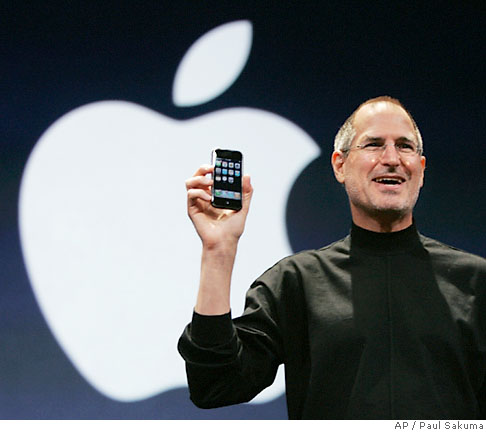 But I'm a sucker, whether Adeena would believe it or not, and I'm a sucker for a reality distortion field. That's why I'm emotionally entertained by Steve Jobs, and why I can't help but be emotionally entertained by Michelle Obama's speech.
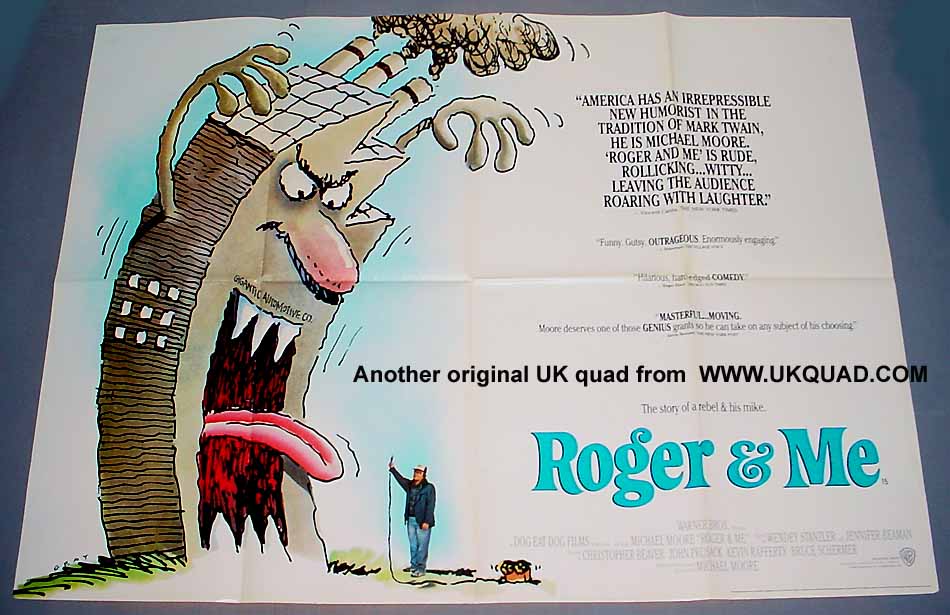 Much has been said, not least in the popular media and even in intelligent literate writing, that decries the goal of profit maximisation as the stated goal of industry. Just off the top of my head, I think of Michael Moore's Roger and Me, where he rails against the fact that profitable industries are still closing plants and moving manufacturing to countries other than the US in the 80s and 90s (a process that, as far as I'm aware is largely complete nowadays). But even more recently The Wire - or more specifically the introduction the the 5th season - talks about how with journalism and the funding of newsrooms, it wasn't that they weren't making profits, it's just that they weren't making enough profits.
  I've come to realise this to be true: that profit maximisation indeed is not a sufficient means of defining what companies should strive for. But of course my objection has little to do with agreeing with the discourse I've cited, and more to do with explaining exactly why "profitable" companies still desire to make sometimes large and drastic changes.
 Brealey-Myers makes an intriguing and really rather stunning assertion about the brief managers should recieve from shareholders - exactly that profit maximisation is not the most appropriate objective of professional managers. This is in part because profit maximisation as a principle is needlessly vague - it is not time specific, it does not say for what period profit is being maximised - whether this year, next year or 5 years hence, each perhaps at the expense of the other, or of other longer term periods of profit. It makes no sense to have one year have the largest profits imaginable at the expense of profits for the next ten years. Similarly owners do not want to sacrifice profits for the next ten years in the hope that at the end of that period there will be one year of huge profits.
 The answer is Net Present Value. I find it a little difficult to explain in totality the concept of Net Present Value except mathematically, and I don't wish to go into too much detail - you can read the
  I'll try and make that a little more concrete. When you have a given amount of money, and you don't do anything with it other than stuff it under your mattress, you are losing money. Not just because of inflation, that makes your money less valuable, but because you are not investing it in order to create more wealth. This investment is not "funny money" - on the contrary it is very real. Whenever you put money into capital markets, that is the money that business users borrow to fund their businesses - to make more and better widgets. It's the money that people borrow to buy a house or car. These are things those people couldn't otherwise do, and you are allowing them to get those things done, for which they are paying you back your investment plus interest. That return on investment is the base level at which someone who doesn't stuff their money under the mattress operates. If you have $100 and you do nothing with it, at the end of one year you have $100 (before inflation). If you put that $100 towards buying government securities that give a 7% return at the end of one year, at the end of one year, you have $107.
 What maximising NPV argues is that if you are investing in something at the same level of risk as a govenment security, it needs to provide a return of more than 7% in order to be a rational decision. Otherwise you are not making as much money as you can given the level of risk. Put another way, you are taking on too much risk for too little reward - when the going rate of that risk is lower than that of your investment.